2026 SHECP Internship Report
The two 2026 SHECP Internship Programs matched 80 students with transformational internship placements, where they provided substantive support to 65 community partners.
The SHECP Summer Internship is designed to give students with an academic grounding in poverty the opportunity to deepen their understanding of poverty, including its definitions, causes, and potential solutions, while providing support to community partners. This reciprocal impact, in which communities impact interns and interns impact their communities, is the trademark of the SHECP Summer Internship. Beyond their placement sites, interns participated in cohort living, academic reflection, vocational exploration, and more.
The Policy & Nonprofit Leadership Internship offers a unique opportunity for undergraduate students to gain experience in public policy and nonprofit leadership while addressing issues of poverty in communities. This program was specifically designed for students who have completed the SHECP Summer Internship Program.
We invite you to read more about it all in the full Summer Internship Report below. Thank you to everyone who helped make Summer 2026 a success!
Community Impact and Reciprocal Investment: The SHECP Summer Internship program is unique because of the partnerships with nonprofits in each cohort city. These partners provide mentorship and guidance as students learn and serve, leading the interns as they work full-time to join anti-poverty efforts in the community. From long-standing partners to brand new connections, the 75 SHECP Summer interns in the 2026 cohort made a lasting impact in their communities and were impacted just as deeply in return.
Across 14 cities, interns spent more than 21,000 hours serving their communities this summer, working with 61 agencies. Five students were part of the brand new Waco, TX cohort, where they worked with 4 organizations ranging from legal support to community development. Click here to learn more about interns and community impact this summer>>
SHECP Internship Academy: From June 1-4, interns participated in the virtual Internship Academy. The Academy is week one of the SHECP Summer Internship and prepares students to responsibly and thoughtfully engage with their placement site and the broader community. Interns were busy completing additional trainings on workplace safety and conflict transformation skills, attending speaker sessions and cohort meetings, and considering vocational impacts of their on-site time.
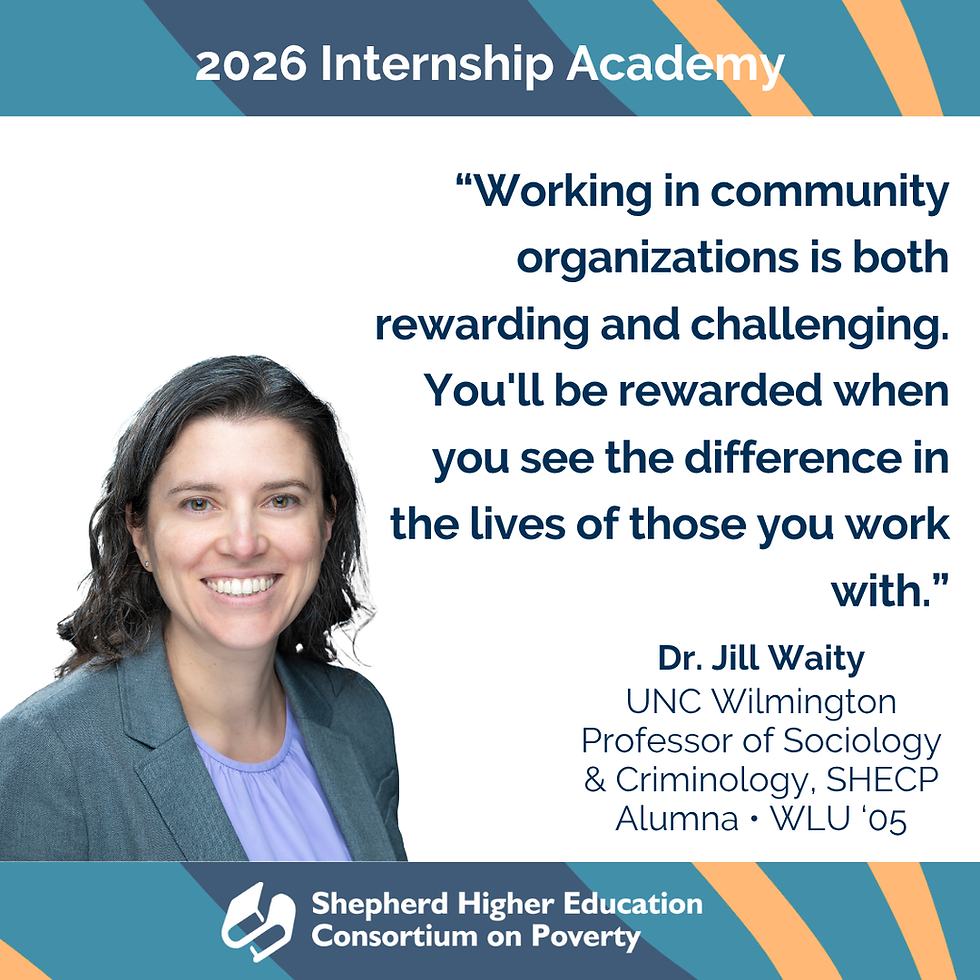
Dr. Jill Waity, a SHECP alum, gave the official welcome address to the full intern class. Dr. Waity is a Professor of Sociology at UNC Wilmington and a 2005 alumna of Washington and Lee University. Following her remarks, Dr. Kelly Hamshaw, a Senior Lecturer and Research Specialist at the University of Vermont Center for Rural Studies, gave the keynote address, “Building Resilience in Rural Places: Insights from Vermont's Flood-Impacted Manufactured Housing Communities.” Students continued to consider rural poverty throughout the summer, through Practitioner Insights speakers and the concluding presentations at the SHECP Annual Conference in August.
New this year, the Alumni Engagement Committee hosted a panel discussion for several recent SHECP alumni to share insights and advice from their summer experiences. SHECP alum Sam Wilmoth kicked off the summer's Practitioner Insights event series with a powerful session on Tuesday. Interns wrapped up the week's virtual sessions with a workshop to hone their Conflict Transformation skills, putting into practice the curriculum they began at the start of the Academy. Click here to learn more about the Academy >>
Living and Learning Within a Community: Cohort living intentionally brings students from across various fields and interests together not only to share housing, but also to share life for eight weeks. For many students, their SHECP summer marked a move to a completely new city, engaging in unfamiliar work and navigating day-to-day life in a new and fun way. They worked together to find the local laundromat, cooked together for weekly potluck dinners, and explored the local landscape. Above all, students spent the summer living and learning together in community, and diving deep into their summer home.

The summer “team” extends beyond the cohort: alumni, local friends of SHECP, member schools in the area, and community partners are all part of the network of support. Though it is difficult to truly measure the relational impact of these eight weeks, long-lasting ties between interns and their communities, interns and their placements, and interns and each other are an indicator of the depth cohort living adds to the SHECP intern experience. Click to read more about cohort community>>

Academic Programming & Practitioner Insights: At its core, the SHECP Summer Internship is an academic endeavor, complementing and expanding the poverty studies education students receive in the classroom. Alongside their on-site placement, students completed a summer-long academic curriculum designed to deepen their reflection and learning as they grappled with the causes and consequences of poverty and inequality. nterns especially considered poverty in rural settings, including the unique challenges to anti-poverty efforts in these places.
The Practitioner Insights Series invites innovative and dynamic leaders doing anti-poverty work to share how their agencies are trying innovative solutions to address poverty in their community and to reflect on their career path, including advice for current interns just beginning their own professional journeys. This summer, interns heard from:
Sam Wilmoth, Senior Manager of Consulting for RAINN
Ryan Wolfe, Defense lawyer and co-founder of ZLS app
LaToya Scott, Residential Director of Tharros Place
Greta Nelson, Dental Coordinator for WV Health Right
All four speakers addressed the importance of seeing the whole person in order to successfully serve others with dignity in anti-poverty work. Click here for more information about the 2026 Practitioner Insights Series>>

This summer, 42 SHECP Summer Interns completed the full Conflict Transformation curriculum—videos, reflections, the workshop, and summer assignments—and received a Certificate in Conflict Transformation. SHECP created this certificate to recognize the time,
thought, and skill students invested this summer into examining their own relationship with conflict, recognizing various sources of conflict in different settings, and exploring individual and collective strategies to use conflict as a force for change.
Returning to SHECP: The Policy and Nonprofit Leadership (PNPL) Internship program offers a unique second internship opportunity for students to build on direct service experience by exploring nonprofit management, advocacy, and anti-poverty policy in Washington, D.C. Through support from the Middlebury Conflict Transformation Collaborative and several of our member schools, five stellar students returned to intern in policy and research-based roles, including focuses on policy discussions of homelessness and rural poverty, researching and supporting legislative initiatives, and advancing national community action foundation work. For the first time, So Others Might Eat (SOME), a long-time SHECP partner

for the community-facing Summer Internship program, hosted a PNPL intern, with a focus on cultivating community partnerships and building program capacity. Click to read more about the 2026 PNPL interns>>
SHECP also debuted a new position this summer. Henley Lynch, UVM Class of 2026 and SHECP Intern in 2023, was the inaugural SHECP Summer Fellow, supporting consortium-wide strategic initiatives to enhance collaboration between schools and virtual programming.
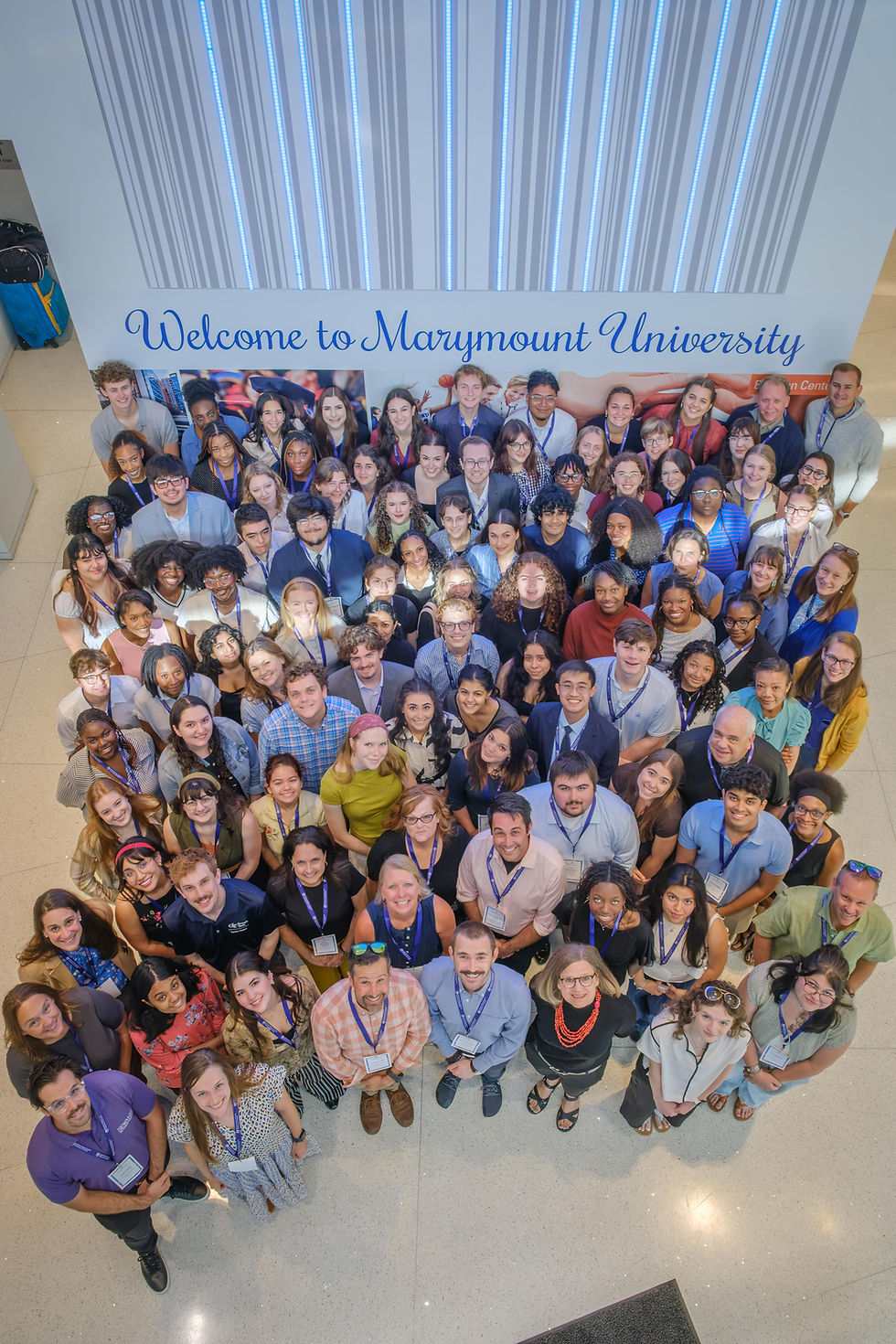
2026 Annual Conference: From July 31 - August 1, SHECP interns, faculty, and staff convened on the campus of Marymount University in Arlington, Virginia for the 2026 SHECP Annual Conference. This year’s conference was co-hosted by Marymount University and was made possible by generous support from the Charles A. Frueauff Foundation.

Each year, the conference is marked by meaningful connections between students, faculty, and staff, and this year was no different. Students and staff had chances to get to know one another and begin the process of bringing summer experiences back to campus, strengthening the ties between SHECP member institutions and finding common ground. SHECP's five PNPL interns co-hosted the Friday Welcome Dinner, and after sharing about their policy and research-based roles in Washington, DC this summer, they invited attendees to enjoy a night of crafts and conversation. David Marchese, SHECP alum and co-chair of the new Alumni Engagement Committee, officially welcomed interns to the alumni network and shared the role SHECP has played in his career journey. After eight very full weeks of on-site, hands-on internship responsibilities, Friday at the Conference offered interns a chance to exhale and reconnect.

During Saturday morning's speaker sessions, Jim Palmer and Tony Pipa focused on the impact of place and community dynamics in studying and addressing poverty. Jim Palmer, Director of Community Engagement at So Others Might Eat (SOME), spoke about how SOME’s programming has moved beyond addressing hunger to “Whole-Person Care,” specifically zooming in on the unique elements of doing this work in Washington, DC. Tony Pipa’s talk, “Reimagining Rural: A National Perspective,” built on earlier discussions of rural poverty. His work at Brookings and with the Commission on US Rural Prosperity advocates for a better understanding of rural America and strives to “enable rural prosperity by strengthening economic opportunity, resilience, and quality of life across rural America.” Click here for more information about the Conference and speakers>>
For many, a highlight of the Annual Conference was the opportunity to hear from interns as they presented reflections of their summer during Saturday afternoon panel discussions. Students wrestled with the tangled causes and consequences of poverty and inequality they saw firsthand over the summer, and began to consider how their experiences will impact them as they return to campus and beyond.

Alumni Network Gives Back: The newly formed Alumni Engagement Committee was in full swing this summer! After hearing from alumni looking for a way to engage with current students, SHECP created the Alumni Engagement Committee (AEC) in the fall of 2025. The committee, led by Mary Wilson Grist and David Marchese, brought together alumni from across multiple decades to consider how to support current students in this program.
Whether 20 years or 2 months out from their internships, committee members were eager to think about how to offer real, robust opportunities for networking and mentorship to this year’s intern class. As in years past, alumni hosted interns for dinner, ice cream outings, and tours of their cities, welcoming this class of interns to their summer homes. The AEC also hosted two virtual events this summer: a young alumni panel during the Internship Academy and a virtual networking hour in June. Click here to read more about the AEC>>
REFLECTIONS FROM 2026 INTERNS:
Throughout the summer, students wrestled with the complex causes and consequences of poverty and inequality, how to connect their on-site experiences with classroom learning, and how their 9-week internships will influence their thinking about future and vocation. In SHECP's Intern Insights series, we invite students to reflect back on an impactful moment or notable takeaway from their summer experience.

Worldwide Leadership Begins With Empathy 
Celebrating World Refugee Day 
A View From the Daystation
Click on any of the images above to read the student's full reflection, or visit https://www.shepherdconsortium.org/internships to see the full collection of Intern Insights.
Want to help us make 2027 our best summer yet? Contact us to find out how you can get involved:
To host an intern at your agency or a welcome event in your city, email internshipdirector@shepherdconsortium.org
Are you a SHECP alum interested in connecting more deeply with the SHECP Network? Contact us at internshipdirector@shepherdconsortium.org to learn more about getting involved with the Alumni Engagement Committee!
To make a financial contribution to help SHECP reach as many students as possible, visit www.shepherdconsortium.org/support or email info@shepherdconsortium.org