
Recording Available: Farming & Food Security Panel Discussion
Updated: Apr 10

In a February 2026 SHECP Springboard event, leaders working at the intersection of food access and agriculture discussed how communities balance immediate hunger relief with the broader systems that shape food security and, specifically, how different organizations are leveraging their local networks and opportunities to integrate the farming community and its products into their efforts to address food access barriers. Access the event recording here>>
The conversation featured Zach Zook of the Central Pennsylvania Food Bank and Maureen McNamara Best of the Local Environmental Agriculture Project (LEAP,) and was moderated by environmental studies professor at Washington and Lee University, Ryan McCoy. Together, they explored how research, community partnerships, and local agriculture all play a role in building more resilient food systems.

Since the Central Pennsylvania Food Bank has a network of 1,100 partner organizations across 27 different counties, they are constantly looking for ways to tailor their programs and outreach to the different characteristics, dietary preferences, and unique needs of each community. Zook’s team conducts “community hunger mapping” studies across the counties in their service area, working with local governments, food pantries, and other community stakeholders. These studies combine surveys, interviews, and data analysis to identify patterns in food access and help guide programs such as food distribution and SNAP outreach. Through these partnerships, the food bank works to ensure that resources reach the communities that need them most while maintaining a strong network of local partners.

For McNamara, the work of strengthening food systems begins at the community level but must ultimately connect to broader networks and advocacy efforts. LEAP relies on community feedback and collaboration to identify patterns that reveal larger systemic challenges and opportunities for new and deeper partnerships with growers. By sharing lessons across communities, organizations can begin to build broader coalitions and push for change at higher levels. As she put it, “How do we take these lessons that we are learning at a hyper-local scale and combine these lessons across different communities to build a network so that we have state-level advocacy or national-level advocacy?”
Both speakers emphasized that relationships and trust are essential to this work. For LEAP, building partnerships with farmers has been central to expanding local food access. McNamara described food systems as fundamentally relational, noting that farmers themselves often think about resilience in ways that can inform community food programs. “Farmers look at ecosystems and resilient systems in a different way than we tend to,” she said. “They’re looking at soil systems and water systems and our whole ecosystem…farmers look to diversify their market and spread out their risk; we are trying to complement that.” Aligning food programs with the seasonal rhythms of agriculture and the flow of farmers’ work helps ensure that both producers and communities benefit.

Throughout the conversation, McNamara and Zook stressed the importance of accessibility and responsiveness. Food organizations often work with urgency, especially when distributing perishable foods or responding to spikes in need. At the same time, long-term change depends on trust and community relationships that develop over time. In many cases, new partnerships and programs grow organically through community connections rather than formal outreach. By combining research, community feedback, and strong relationships with farmers and partners, organizations like LEAP and the Central Pennsylvania Food Bank are working not only to address immediate food needs but also to build stronger and more equitable food systems for the future.
More information about topics discussed during the event:
Links about our speakers' organizations
Here is the website for LEAP: Local Environmental Agriculture Project, as well as information about their farmers markets, Mobile Market, Farm Share, Processing Kitchen, and Food Hub LEAP also hosts a Kids' Bucks Program to introduce children to Farmer's Markets.
Here is the website for the Central Pennsylvania Food Bank and links to two of their hunger mapping reports: one in Dauphin County and one from Snyder, Union, and Northumberland Counties. The Central Pennsylvania Food Bank also hosts the Adopt a Pantry program, which accepts donations from individual, experienced growers to participating food pantries.
Further links of note from the conversation
Pennsylvania Agricultural Surplus System - this program offers reimbursement to growers, processors, and distributors when they donate food to the community food banks
Virginia Fresh Match - connects community members to farmers markets and local food sources who double the value of SNAP
Catawba Sustainability Center grass-fed beef program - a partnership with LEAP, Virginia Tech, and Roanoke County to bring grass-fed beef to the local farmers markets
Virginia Food is Medicine Coalition - hosted by the Virginia Community Healthcare Association with a focus on building nutrition into Virginia's healthcare programs
Southwest Produce Rx - a program for adult Medicaid patients with type 2 diabetes, prediabetes, or hypertension to gain access to fresh fruits and vegetables
Roanoke Foodshed Network - a regional network of growers, farmers, local food advocates, and local planners to address food system changes in the area
About the Speakers:
Maureen McNamara Best, Local Environmental Agriculture Project

Maureen McNamara Best is the Executive Director of LEAP, Local Environmental Agriculture Project, in Roanoke, VA. Maureen loves food -- thinking about food, growing food, eating food, cooking food, and, of course, buying local food at LEAP's famers markets. Maureen has been working with food, agriculture, and community since the early 2000s. Her work and professional experience is wide-ranging and includes teaching high school agriculture in Raleigh, NC, working with migrant farmworkers in eastern North Carolina and in the Colorado plains, doing food safety inspections in Boulder, CO, and studying the economic viability of the local food system in Northern Colorado.
Maureen has an MA in Anthropology from Colorado State University and undergraduate degrees in Agriculture Education, Spanish, and Anthropology from North Carolina State University. Maureen is a Bloomberg Fellow at Johns Hopkins University Bloomberg School of Public Health where she studies the intersection of food systems, community, and health. Maureen, her spouse, two young kids, and pup all love Roanoke and are happy to call Southwestern Virginia home.
Zach Zook, Central Pennsylvania Food Bank
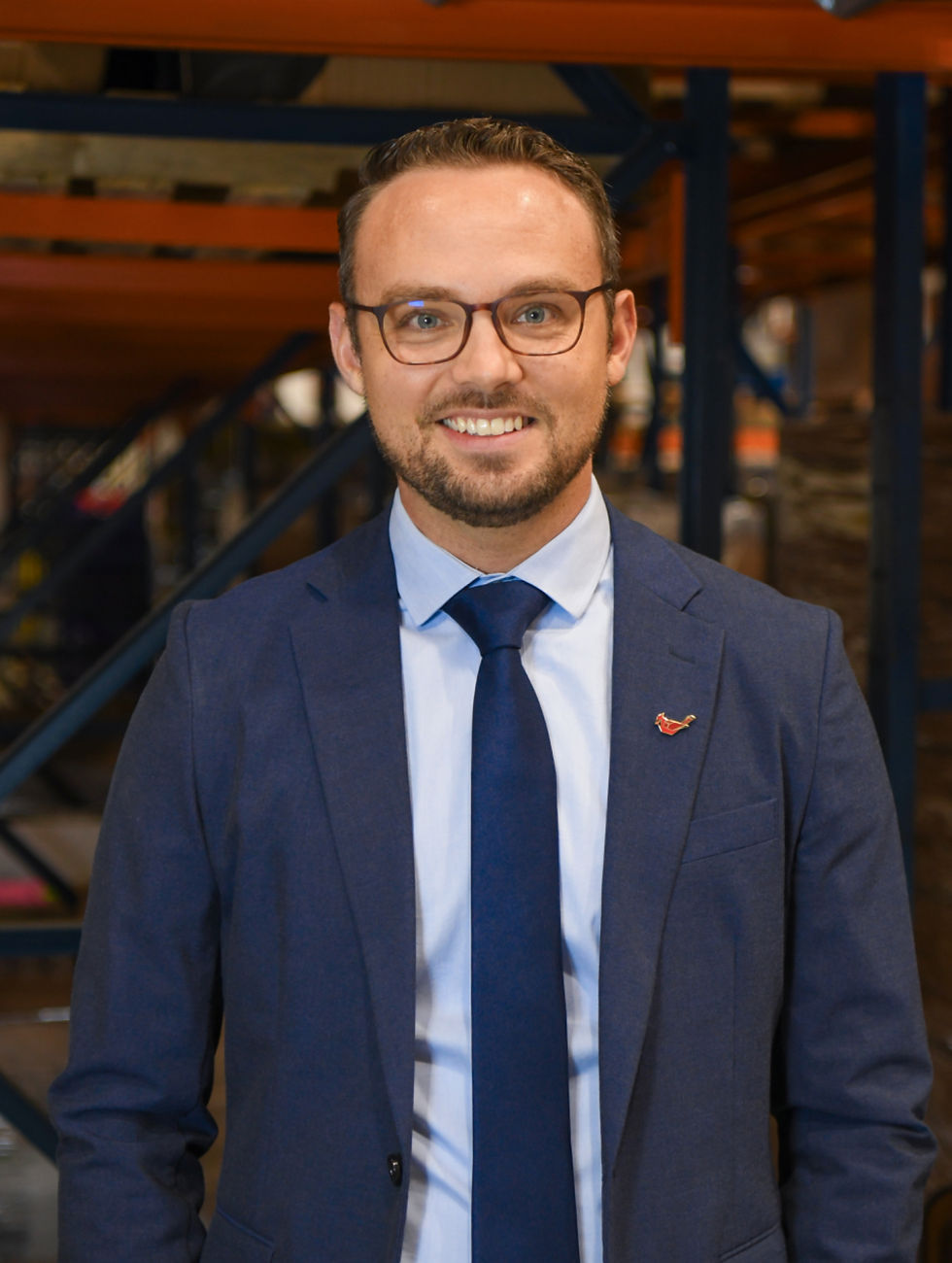
As Chief Strategy Officer, Zach leads the Impact, Policy Research, and Government Relations teams at the Central Pennsylvania Food Bank. He is responsible for leading strategic planning of priorities and initiatives along with implementation across the organization. Zach and his team apply neighbor-centered research, data, and analysis to policies, programs, and process improvement internally, with partner agencies, and with anti-poverty policy advocacy work at the local, state, and federal level. Zach has been at the Central Pennsylvania Food Bank since July 2021.
Prior to the Central Pennsylvania Food Bank, Zach worked in Beirut, Lebanon with Mennonite Central Committee where he developed and managed more than 50 humanitarian relief, food security, and livelihoods projects in Lebanon and Syria as part of the Syrian Humanitarian Crisis Response. Zach has a Master’s in Public Affairs in Domestic Policy from Princeton University where he focused on poverty, food insecurity, and public policy. During graduate school, Zach was a Policy Fellow in the New Jersey Governor’s Policy Office. He holds a Bachelor’s in Economics and Math from Eastern Mennonite University.
Ryan McCoy, Professor of Environmental Studies

Ryan McCoy, Assistant Professor of Environmental Studies at Washington and Lee University, will serve as the event moderator. McCoy is a philosopher whose research focuses on social and ethical problems in climate change research and policy, as well as community-based approaches to address these challenges. He teaches Food Ethics, Environmental Humanities, Environmental Justice, and Introduction to Environmental Studies. Prior to joining the core faculty in Environmental Studies, he was a fellow at the USDA Midwest Climate Hub, and has experience conducting assessments and field work with farmers and other ag-professionals across the Midwest region.
About the Event Co-Hosts:

Bucknell University's Center for Community Engaged Leadership, Learning & Research
The Center's mission is to "build intentional and transformational opportunities for Bucknellians and community partners to collaborate equitably and learn deeply around identified priorities and strengths to positively impact our world." Learn more about the work on Bucknell's campus >>

Campus Kitchen at Washington and Lee University
The Campus Kitchen at Washington and Lee is a student run organization that aims to address food waste and food insecurity through a variety of outreach programs, and works to "strengthen bodies, empower minds and build communities through food." In addition to serving prepared meals, distributing groceries, and delivering weekly packages of non-perishable breakfast, lunch, and snack items, the Campus Kitchen coordinates an annual event series called Just Food. These events explore the intersection between the food system and issues of poverty and justice and have included lectures on food in the carceral system, redlining, and public policy. Learn more about Campus Kitchen at Washington and Lee >>
All SHECP Springboard events are designed to begin a conversation with a virtual, Consortium-wide webinar designed to provide background on a topic and introduce unique perspectives. You are then encouraged to continue the conversation within your own classroom or community. For each event, SHECP will provide several questions or prompts as one way to continue the conversation.

We invite you to incorporate these Springboard events into your class, programs, groups of faculty and staff, or broader community discussions in the way that works best for you!
Log-on to watch the event live as a group and then continue the conversation at the conclusion of the webinar
View the recording at later date as a group and then continue the conversation at the conclusion of the webinar
Ask participants to watch the event individually and then plan a follow-up discussion, either in-person or virtually
Assign the recording as an assignment or part of the assignment in preparation for a class or student group meeting
Use SHECP’s discussion questions or create questions that reflect local context


